At a Glance
Vintage pint mugs typically run £600-£1,400, depending on age, maker, and condition
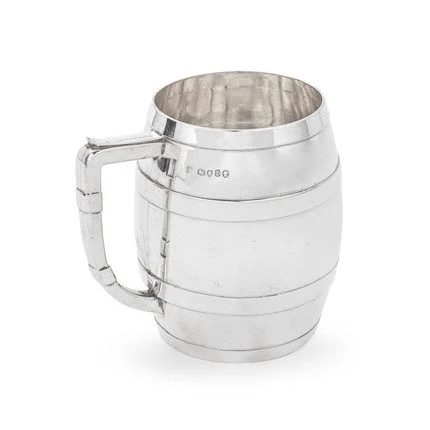
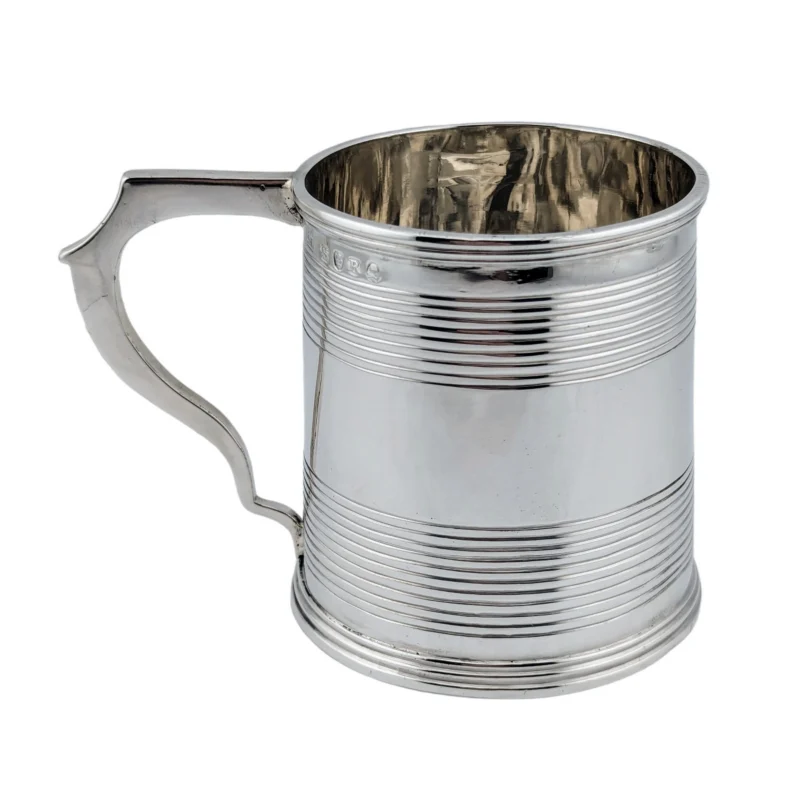
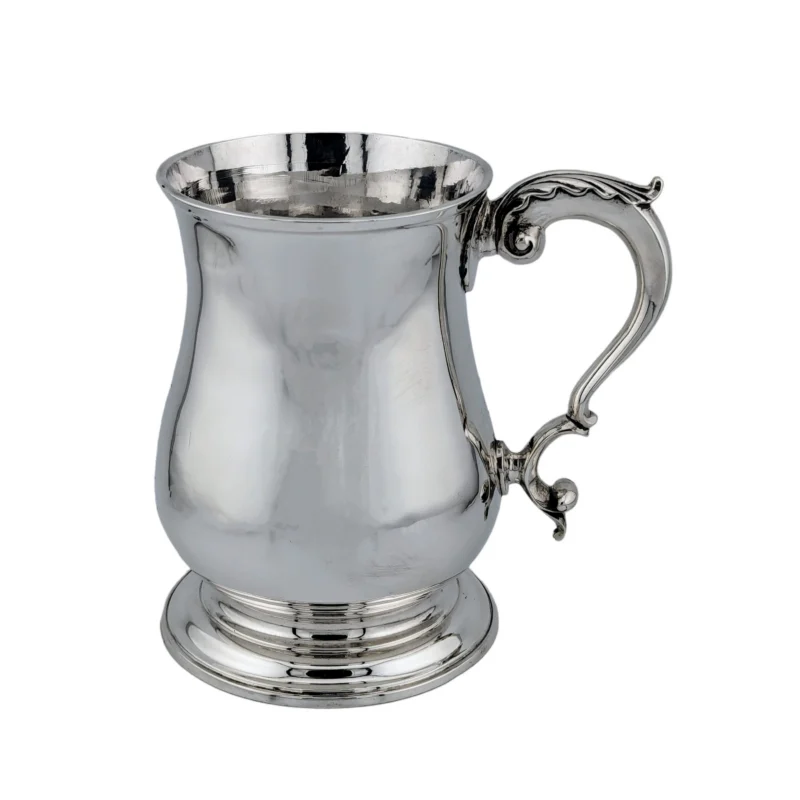
Two main shapes: straight-sided or baluster; a lidded version is technically a tankard
Check the rim gauge for comfort, and wall thickness before engraving
Pre-1800 examples are seamless — one piece, no side seam
A traditional christening gift, usually a half-pint or third-pint child’s cup
Genuinely usable today, not just for display — sherry, champagne, everyday drinks
Style & Maker History
Surviving mugs and tankards are mostly Victorian or later — genuine 18th-century examples are rare, and where they survive, seamless one-piece construction is one of the clearest signs of the period. Style follows the period closely: early 19th-century pieces tend to be plain, with straight sides and simple reeded or engraved decoration; Victorian examples are often more heavily worked, hand-chased with floral or figurative scenes and finished with a beaded rim; by the early 20th century, styles often returned to plainer Georgian tankard shapes, sometimes with applied strapwork. Silversmiths associated with mugs and tankards historically include the Barnard family workshop, Mappin, and George Unite of Birmingham.