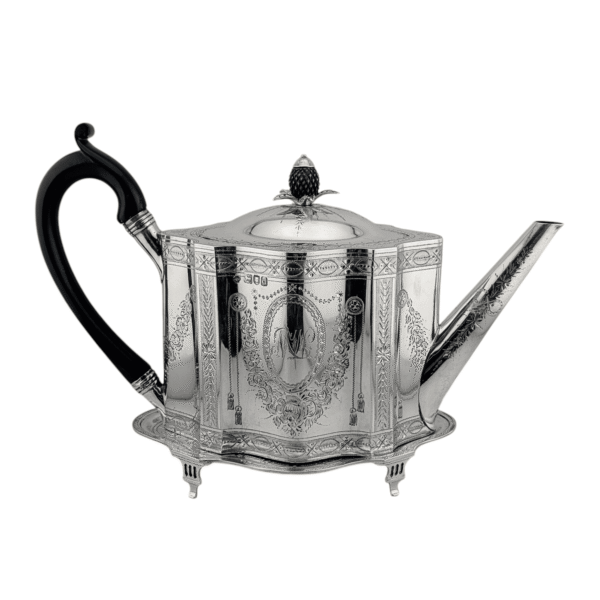
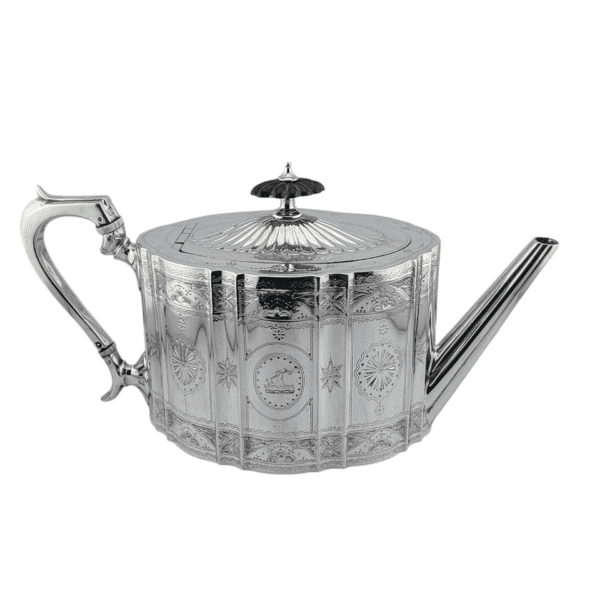
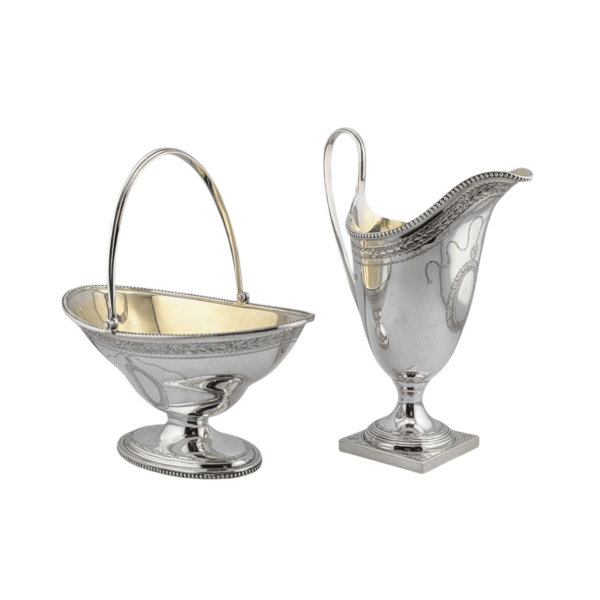
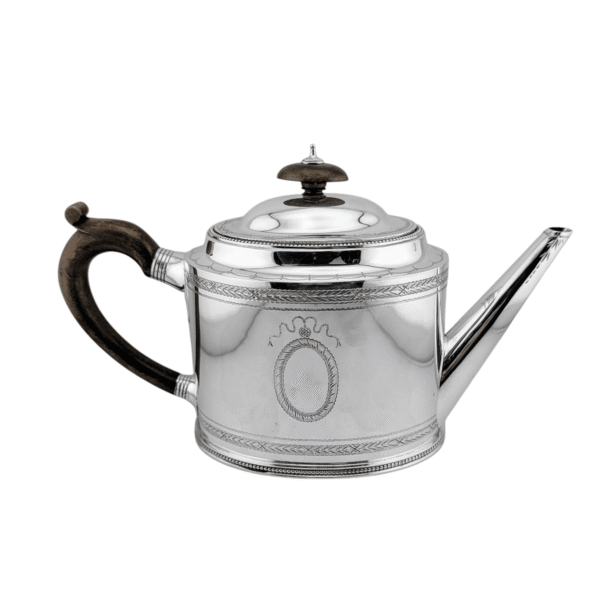
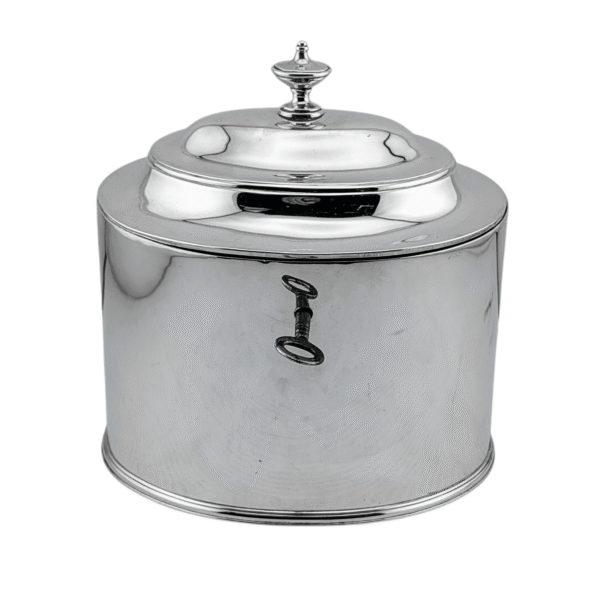
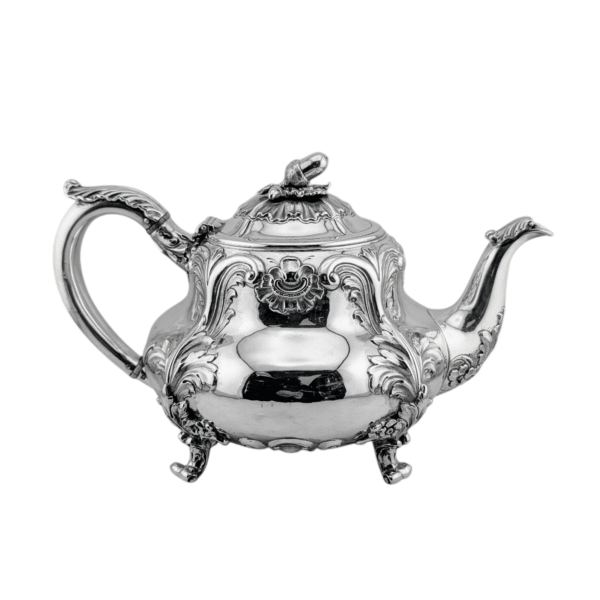
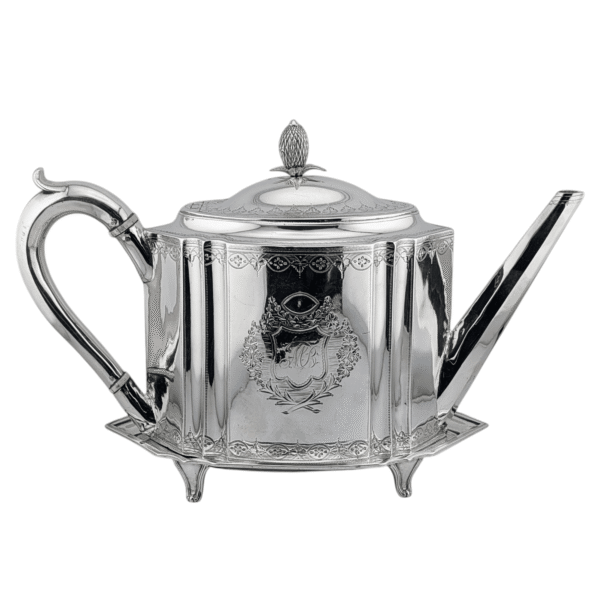
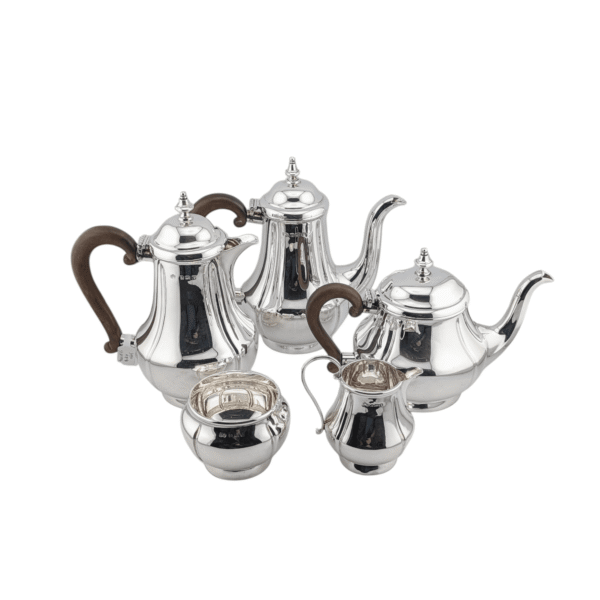
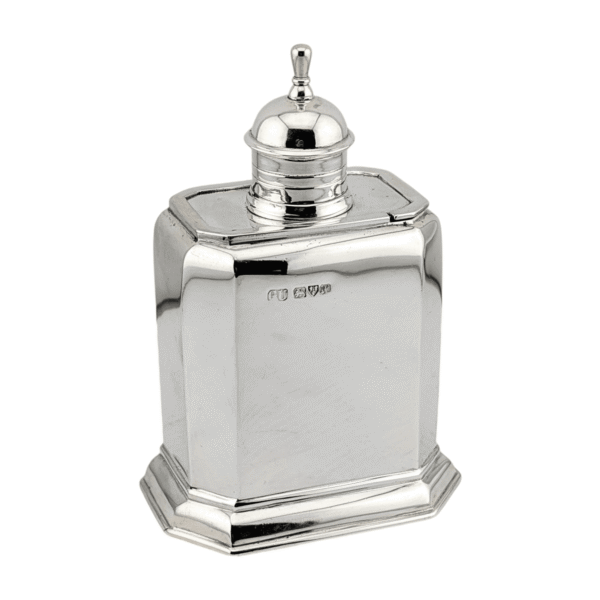
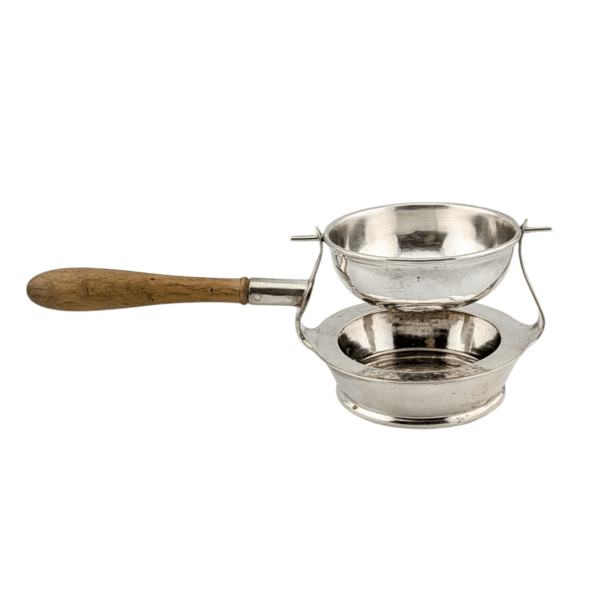
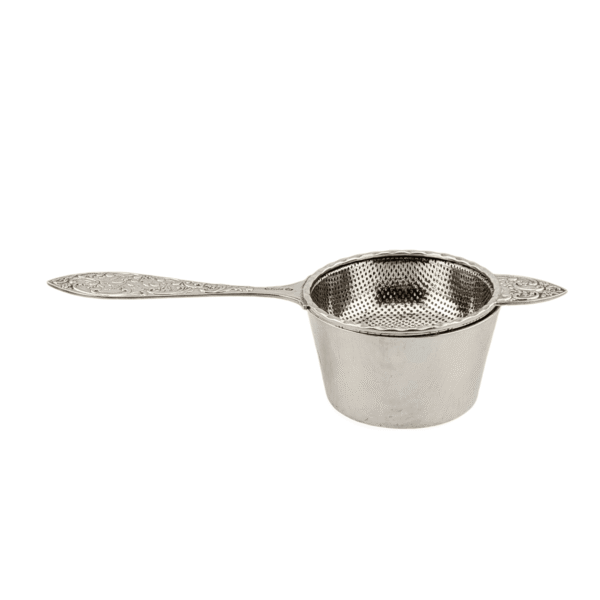
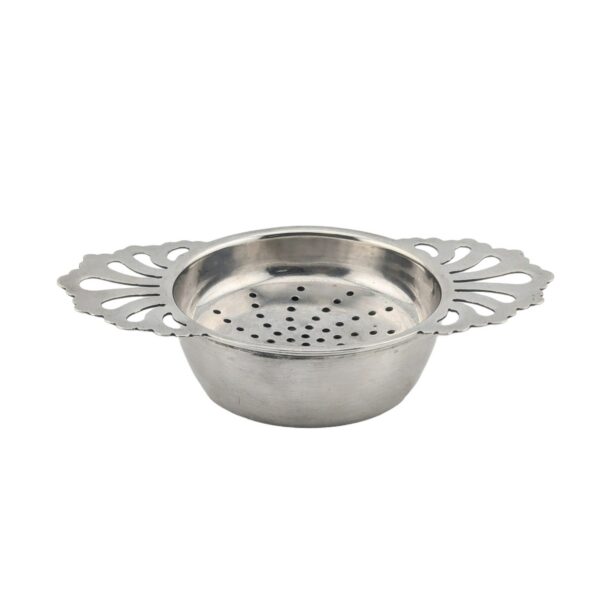
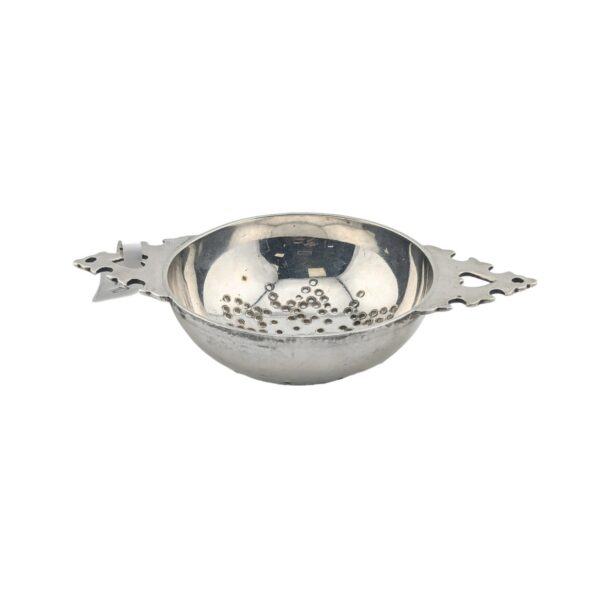
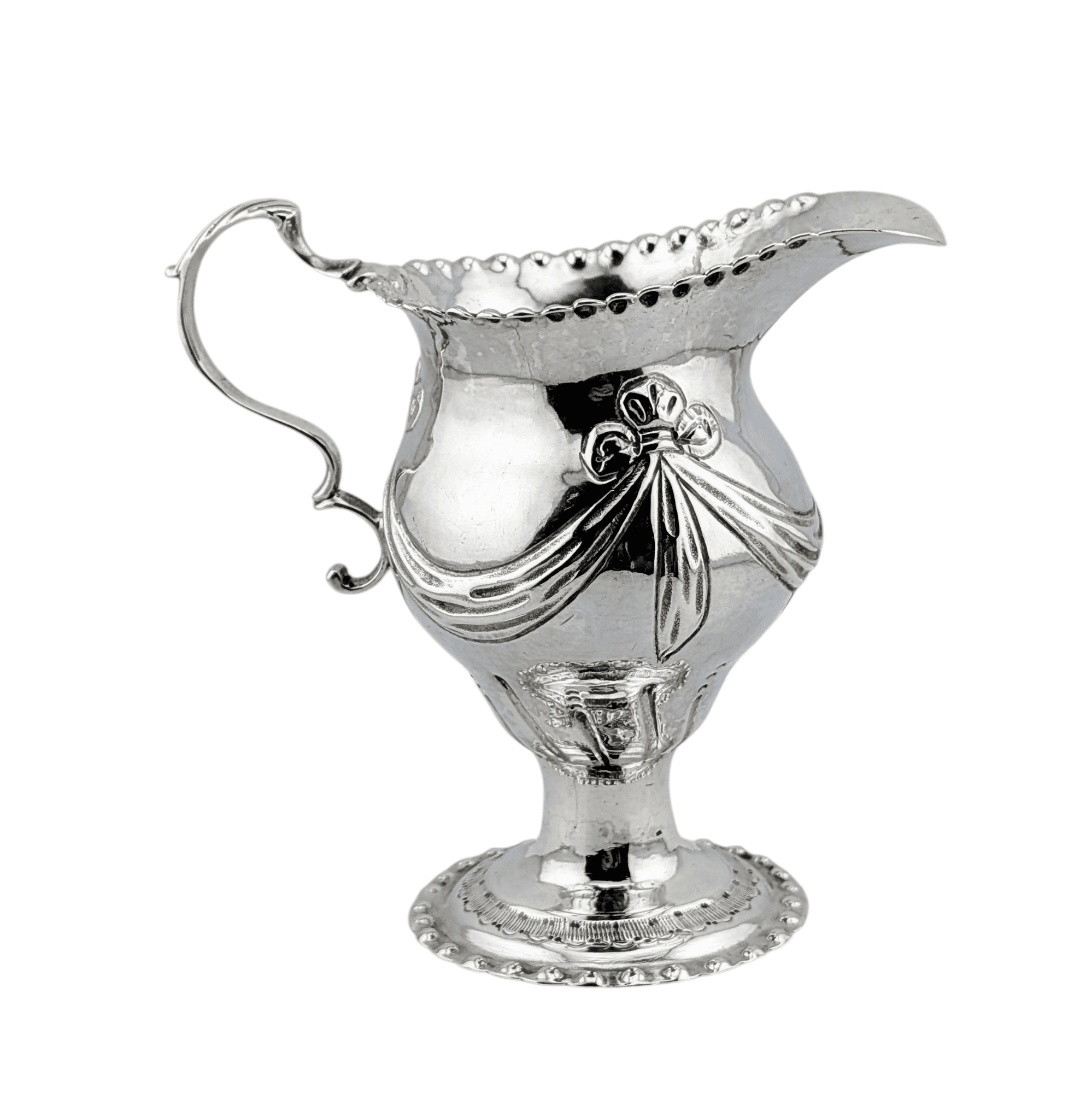
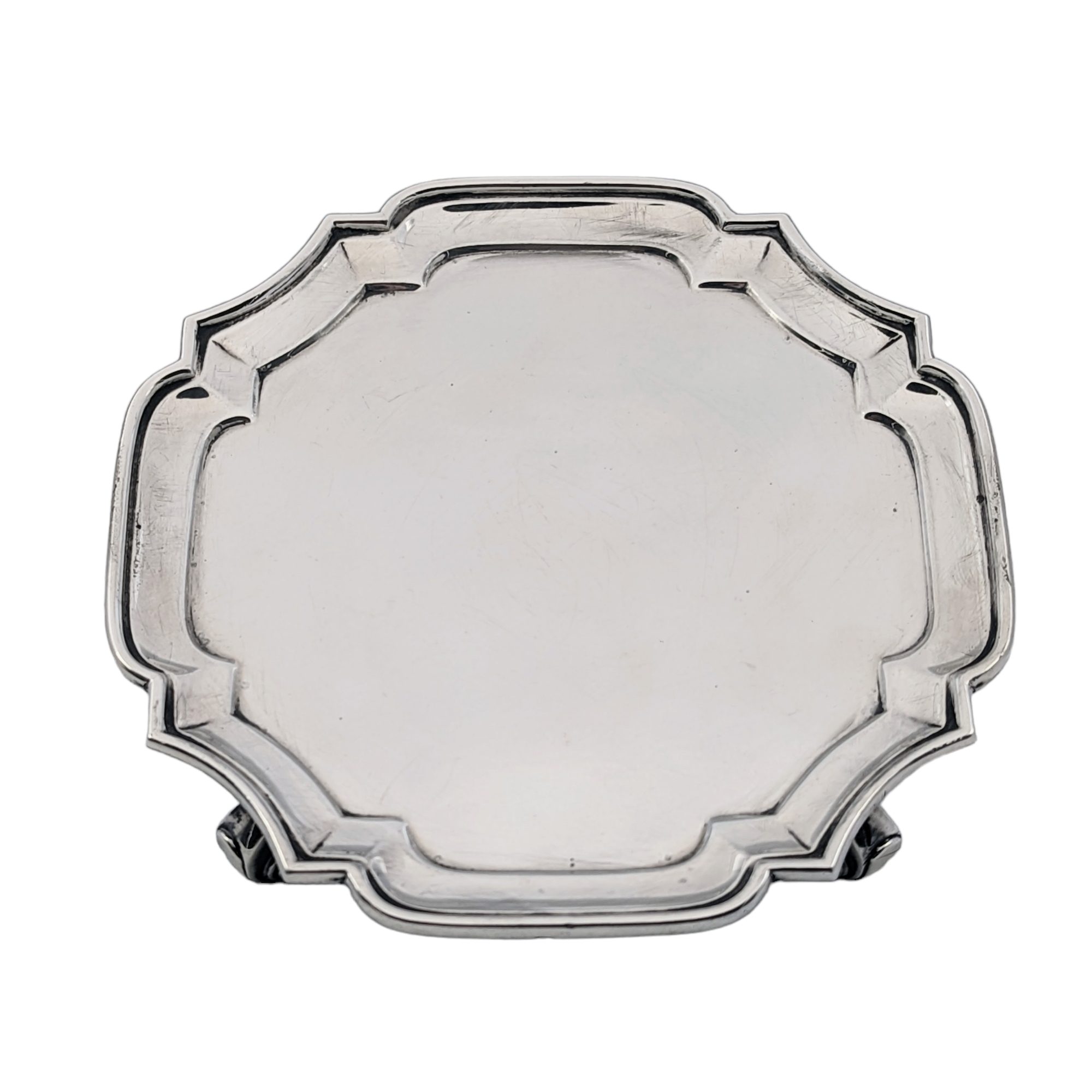
Tea had reached Britain, or at least London, by Tuesday 25 September 1660, when Samuel Pepys recorded trying it for the first time in his diary. It arrived as part of a three-way trade with the East, tea and silver bullion among the goods moving between Britain, Asia, and the Americas. Tea was expensive early on, which gave it a certain social cachet, reflected in the earliest teapots — small pieces like the ‘bullet’ style. As tea became more affordable, pots grew larger and more elaborate: the straight-sided ‘can’ style of the 1770s and 1780s dates from one of the most contested periods in the history of tea taxation and British-American relations. By the high Victorian period, between 1860 and 1890, tea had become part of everyday life, reflected in large, elaborate services — five, seven, even nine pieces was not unusual, typically with a matching tray.
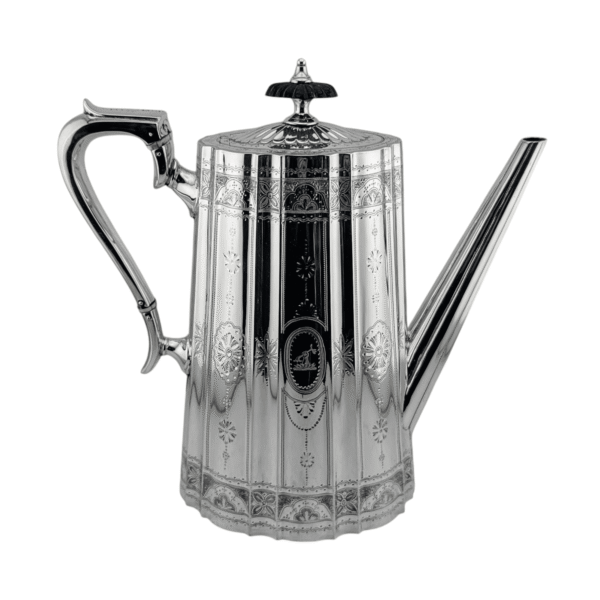
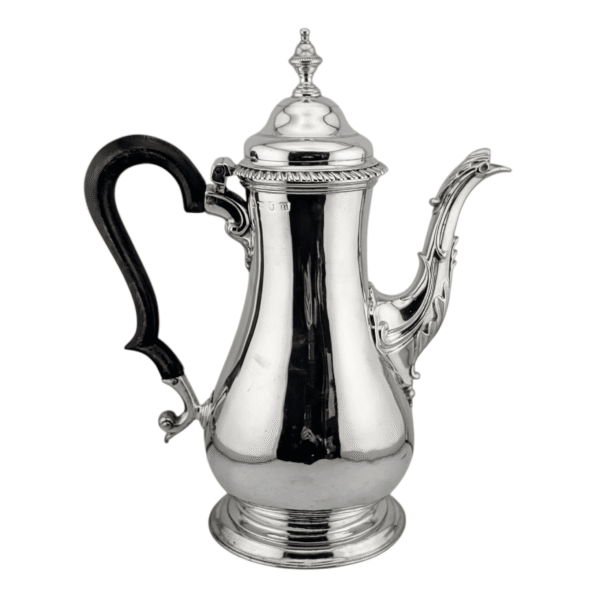
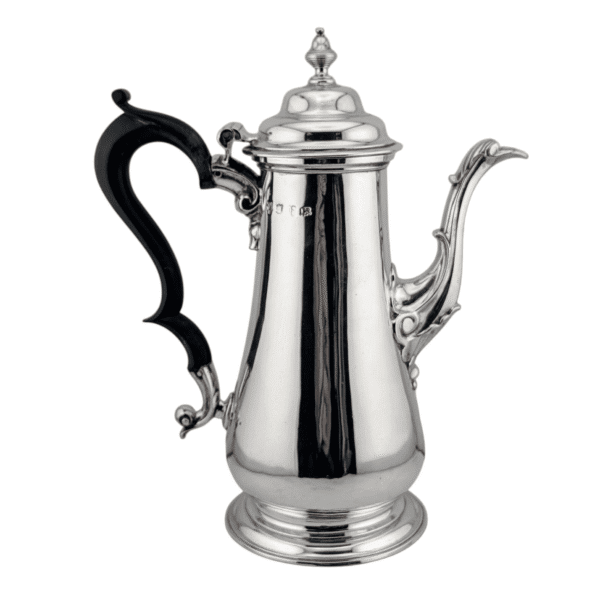
Coffee has an almost exactly parallel history in London. The city’s first coffee house opened in 1652 in a shed on St Michael’s Alley, run by Pasqua Rosee, a Sicilian-born Greek who arrived in London as a servant and printed his own advertising flyer for the drink. His shop, known as The Turk’s Head, was one of 83 licensed coffee houses in London by 1663. By the time George I was crowned in 1714, London had close to 500 coffee houses. English silver coffee pots followed a similar path to teapots: the earliest examples, from the late seventeenth century, were tall, slender, and tapering — close enough in shape to early teapots that a surviving piece is sometimes only identifiable by its engraved inscription. An octagonal form became fashionable during the Queen Anne period; spouts settled on the side opposite the handle by around the 1720s; and by the 1740s, a shorter-spouted, pear-shaped style had come into fashion. Like teapots, coffee pots eventually became part of a matched service rather than a piece bought alone.