FREE SHIPPING on UK ORDERS

Your Cart

Sterling silver Mugs & Tankards

Sterling silver mugs and tankards — a traditional christening gift, and genuinely useful pieces beyond display.

Showing 13–24 of 57 resultsSorted by latest

Sterling silver Mugs & Tankards

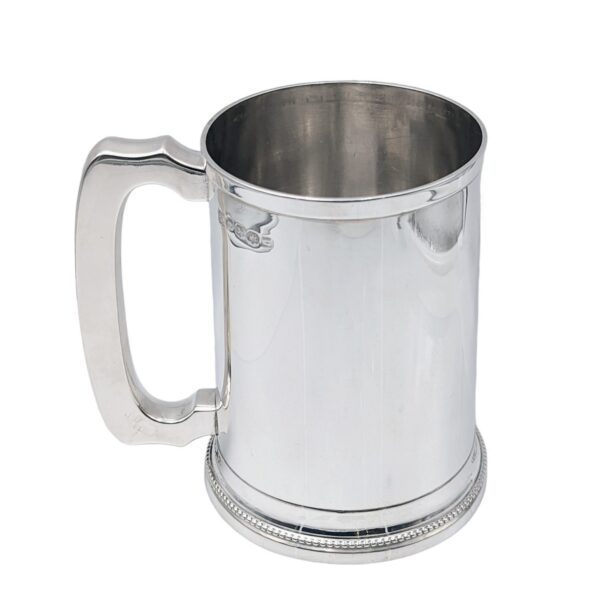
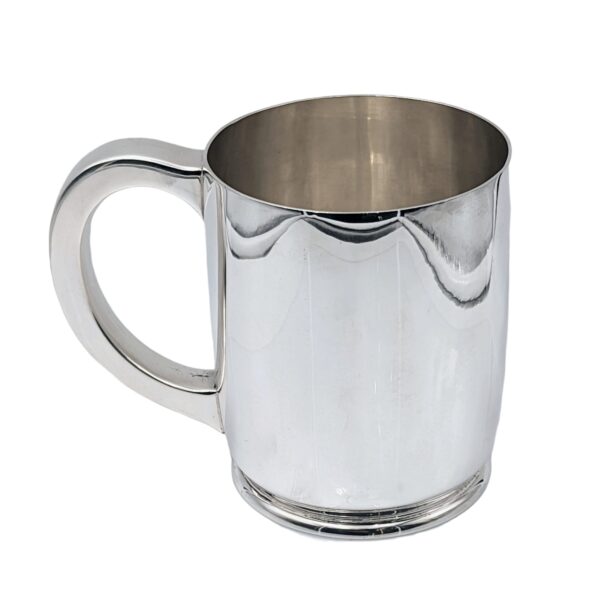
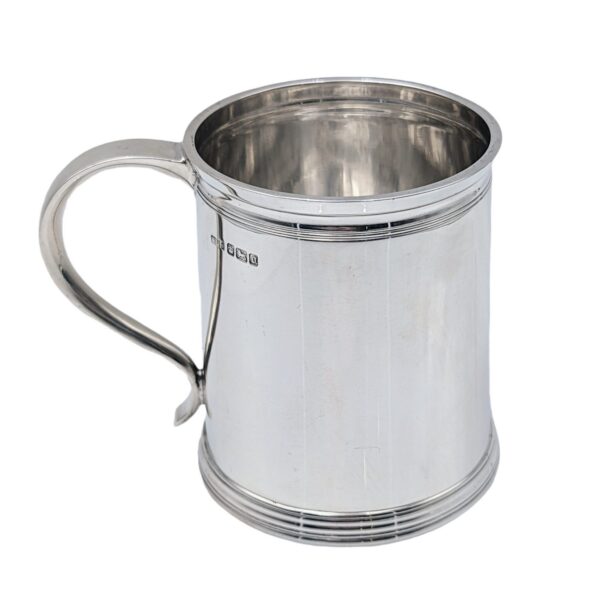
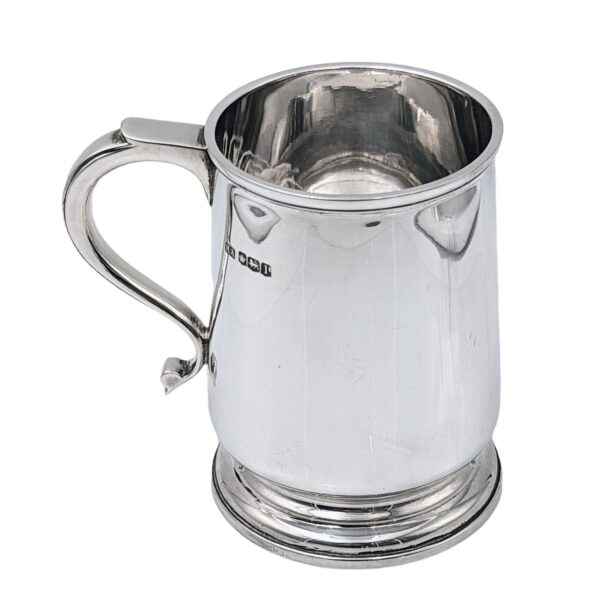
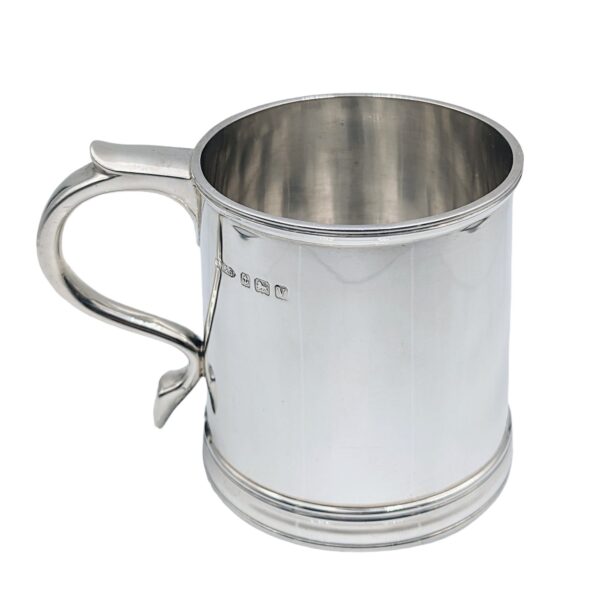
Mugs and tankards were historically a status symbol — the tankard, in particular, was one of the most valued pieces kept in what was known as a household’s “plate cupboard.” Children were traditionally given a miniature version at their christening, and that remains one of the most common reasons a silver mug is bought today. Capacities are usually a pint, a half pint, or a third of a pint for a child’s cup. Every piece is hallmarked, guaranteeing the silver content under UK law, and despite the history, these are genuinely made to be used, not just displayed.

At a Glance

  • Vintage pint mugs typically run £600-£1,400, depending on age, maker, and condition
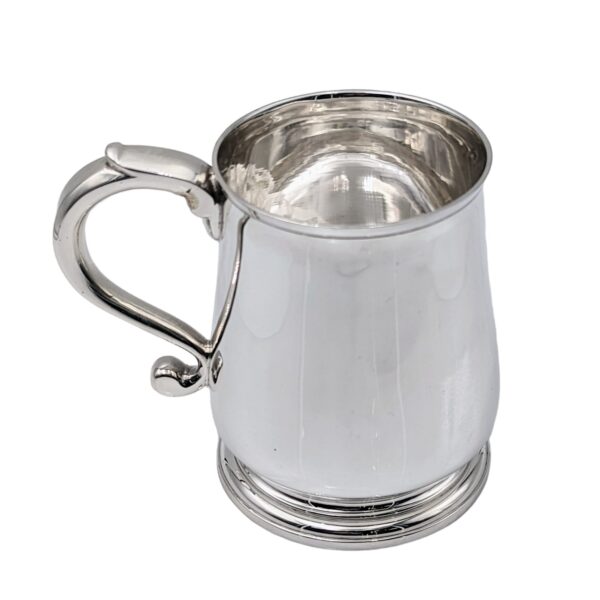
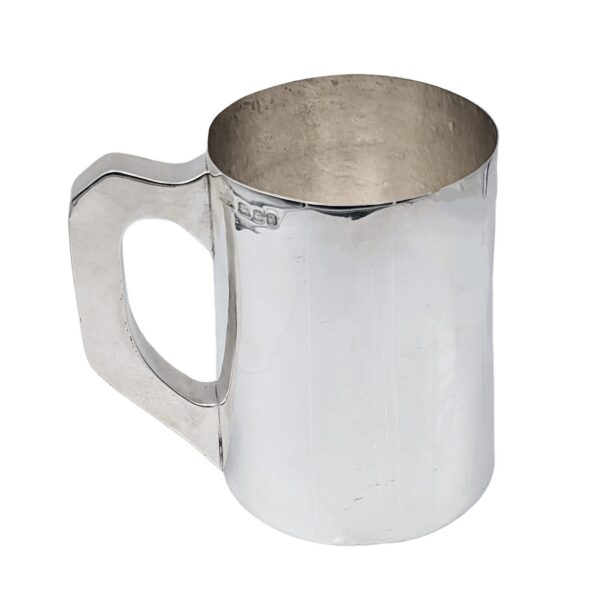
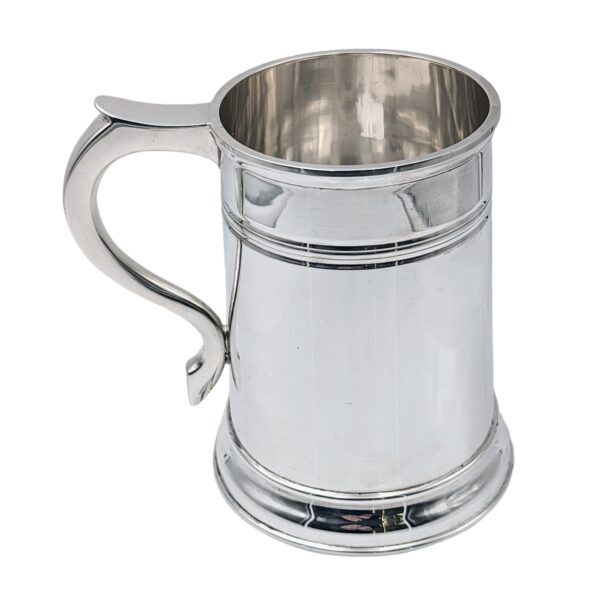
  • Two main shapes: straight-sided or baluster; a lidded version is technically a tankard
  • Check the rim gauge for comfort, and wall thickness before engraving
  • Pre-1800 examples are seamless — one piece, no side seam
  • A traditional christening gift, usually a half-pint or third-pint child’s cup
  • Genuinely usable today, not just for display — sherry, champagne, everyday drinks

Style & Maker History

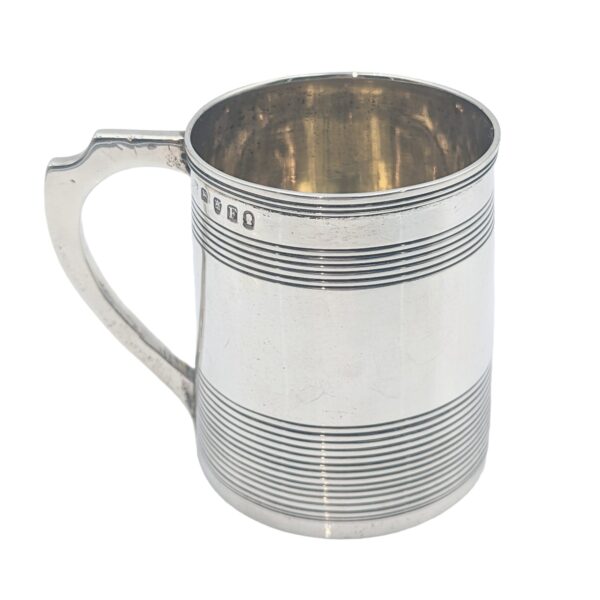
Surviving mugs and tankards are mostly Victorian or later — genuine 18th-century examples are rare, and where they survive, seamless one-piece construction is one of the clearest signs of the period. Style follows the period closely: early 19th-century pieces tend to be plain, with straight sides and simple reeded or engraved decoration; Victorian examples are often more heavily worked, hand-chased with floral or figurative scenes and finished with a beaded rim; by the early 20th century, styles often returned to plainer Georgian tankard shapes, sometimes with applied strapwork. Silversmiths associated with mugs and tankards historically include the Barnard family workshop, Mappin, and George Unite of Birmingham.

Buyer's Guide

Shape is the main thing to know before buying. Mugs come in two main forms — straight-sided, or the curvier baluster shape — while a lidded version is technically a tankard rather than a mug, generally larger, and one of the clearer signs of an important piece in a Georgian household. You'll also find variations like glass-bottomed mugs. A child's cup is usually the smallest of the group, typically half a pint.

A few practical things worth checking before buying: the gauge of the rim, for comfort in actual use; whether the area you'd want engraved is thick enough to take it safely; and, for anything claiming to be pre-1800, that the body is genuinely seamless — one-piece construction with no side seam is one of the clearer signs of an early piece. Style generally follows the period, the same as most antique silver. As a rough guide, vintage pint mugs typically run from around £600 to £1,400, though this varies with age, maker, and condition.

What is an Antique?

Any item which is guaranteed to be over 100 years old.

What is hallmarked Sterling Silver?

Sterling Silver is guaranteed by the UK Hallmarking Act. Each piece is independently verified and assayed for the purity of silver content.

Can I view these items in person?

Yes, all of the items shown on our website are available to view at our showroom in The London Silver Vaults.

How do I clean and maintain my silver?

Looking after your silverware is a simple process. We have put together a guide at https://johnsurtees.co.uk/knowledge/how-to-clean-silver-care-guide/

EXCLUSIVE GIFT RANGE

Join Our Newsletter